A Ticking Clock – Why Content Holders Need To Migrate Magnetic Tapes Before It’s Too Late
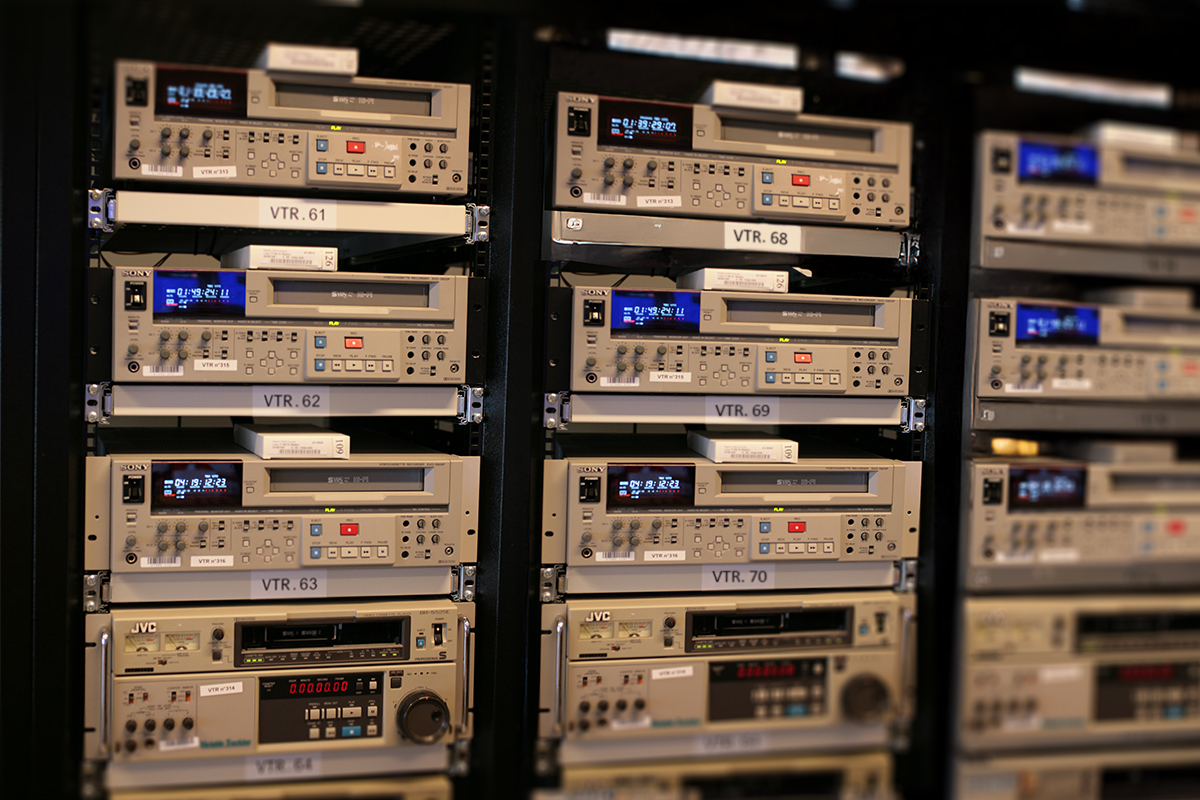
Content holders around the world, such as national broadcasters, archives and cultural institutions, hold hundreds of thousands of hours of video content – much of it valuable and culturally important.
For 40 plus years, between the 1960s and the 2000s, magnetic tapes were the dominant format for much of this content. It became, and remains, the host for much of the world’s content during that period – from government archives to broadcast media.
This format was popularised by VHS, which experienced its golden period in the 1980s and early 90s as home video became mainstream, as well as the likes of Betacam, Betamax and DV.
The rise and fall of VHS
More than any other video format, VHS became ingrained in the nation’s psyche after being launched by JVC in 1976. It quickly became the dominant format for home videos across the next two decades before starting its slow decline after DVDs and then digital/streaming solutions became the go-to.
By 2010, most companies had ceased production of VHS. Funai of Japan was the last known company in the world to manufacture VHS equipment, producing video cassette recorders under the Sanyo brand in North America. But even Funai stopped production of VHS equipment in July 2016, pointing to a lack of components and declining sales.
For a good while, though, magnetic video tapes ruled the roost in broadcasting. However, unlike other mediums such as film, magnetic video tapes degrade much faster (with a typical lifespan of 10-20 years), meaning it is not an ideal medium for long-term archival storage and making migration vital to prevent permanent loss.
Preserving Estonia’s cultural heritage
It was this issue – the threat of permanent loss to many hours of ‘irreplaceable Estonian heritage’ spanning 70 years – that led to The National Archives of Estonia (NAE) calling upon Memnon to digitise over 1,100 magnetic video tapes containing 4,300 hours of footage.
Memnon was selected due to its experience with European archives, its highly specialised staff and cutting-edge technology, including climate-controlled transport for sensitive materials.
With tapes dating back to 1999 – including parliamentary session recordings and materials from the country’s history – Memnon worked fast to provide its full preservation services to deliver the major, EU-funded project within a strict eight-month schedule.
Now publicly accessible online, the newly digitised content has helped to reinforce the NAE’s position as a leading cultural and historical institution in the Nordic and Baltic region.
What’s more, it showcases the value of specialist digitisation expertise to content holders who are facing the urgent challenge of preserving legacy audiovisual collections before they degrade and are forever lost.
Experts in safeguarding cultural heritage
Memnon specialises in preserving the rich cultural heritage of countries around the world, digitising and safeguarding it for many generations to come.
Memnon has been at the forefront of media archiving for the past two decades, having successfully migrated more than 5 million hours of audio and video content worldwide – a number that continues to grow each year.
We can call upon an expert in-house team of engineers, operators, and developers to offer tailored solutions to even the most challenging media restoration issues, ranging from oxidation and physical damage to mould and dirt contamination.
As outlined above, we can also act at pace to ensure that crucial archival footage is migrated before it becomes obsolete.